An aging roof does not always present an obvious decision. The shingles may have lost some of their original appearance. A few areas may have required repairs. Granule loss or weathering may be visible, yet the roof may not show the kind of widespread failure that makes replacement an immediate conclusion.
This is the point where homeowners often begin asking about restoration or rejuvenation. Could the existing roof be preserved instead of replaced? Could localized defects be corrected first? Would a treatment make sense for the shingles that remain?
Those are useful questions, but they arrive slightly too early.
Before considering any Roof Restoration strategy, the first task is to establish whether the existing roof is actually suitable for preservation. Rejuvenation should not be used to make an unsuitable roof appear healthier. It should be considered only after the roof’s condition, defects, and underlying concerns have been evaluated.
The decision becomes much clearer when you follow three steps: inspect the roof, determine whether its problems are compatible with preservation, and then compare repair, rejuvenation, and replacement as separate strategies.
TIP
Begin with the roof, not the rejuvenation product. A treatment should be selected only after the existing roofing system has been evaluated as an appropriate candidate.
Step 1: Inspect the Roof Before Choosing a Treatment
The first step is diagnostic. Before deciding how to preserve a roof, determine what is actually happening across the roofing system.
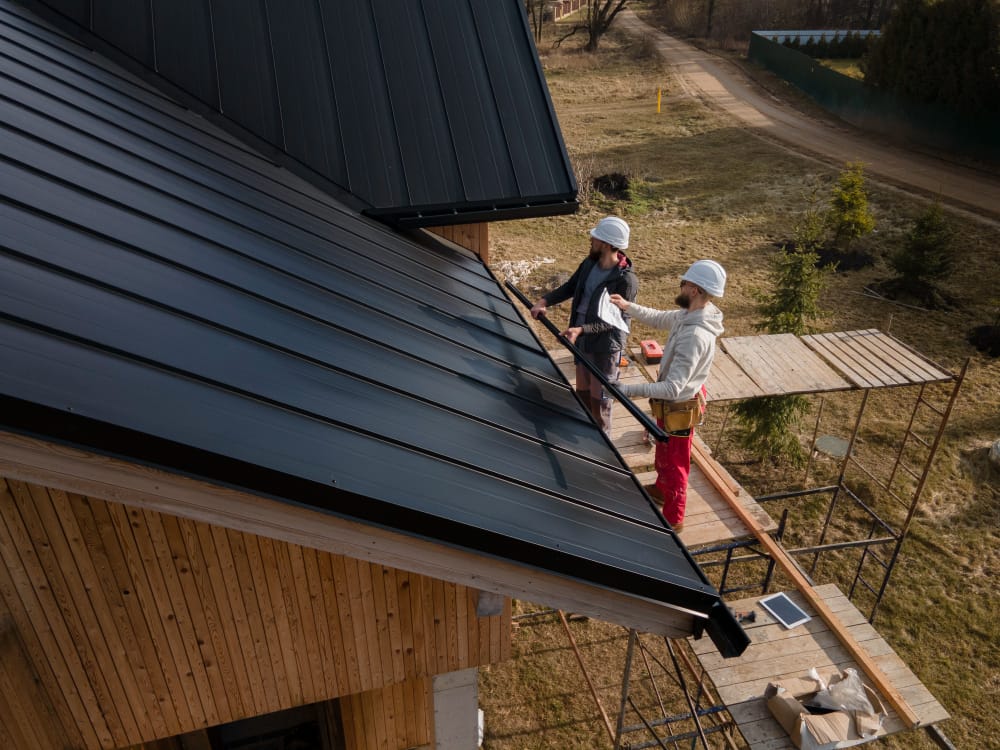
A professional evaluation should look beyond whether shingles appear old from the ground. The objective is to identify localized damage, recurring problems, important roof details, and signs that could indicate conditions outside the capabilities of a rejuvenation treatment.
A practical evaluation can proceed in this order:
- Document the overall shingle condition. Look for patterns rather than focusing only on one conspicuous area. The distribution of deterioration can be as informative as the individual symptoms.
- Identify missing or physically damaged shingles. Rejuvenation should not be confused with replacing roofing components that are already damaged or absent.
- Review the leak history. Note where leaks have occurred, whether they were isolated or recurring, and what repairs were previously performed.
- Evaluate flashing and transitions. Walls, chimneys, valleys, vents, skylights, and other interruptions can create roofing problems that a shingle treatment alone cannot correct.
- Review penetrations and roof edges. These areas deserve attention because the roofing system must integrate with other components rather than function as an uninterrupted field.
- Look for evidence of underlying concerns. Where observations suggest possible deck, substrate, moisture, or structural issues, those conditions require appropriate investigation before preservation is considered.
- Document previous repairs. Repeated work in the same location may reveal an unresolved problem rather than an isolated defect.
This process changes the conversation from “Does the roof look old?” to “What exactly is deteriorating, where is it happening, and what type of corrective work would be required?”
STEP 1 CHECKLIST
✓ Overall roof condition documented
✓ Leak history mapped
✓ Damaged or missing shingles identified
✓ Flashing and transitions reviewed
✓ Penetrations and roof edges considered
✓ Previous repair locations recorded
✓ Possible underlying concerns identified for further evaluation
⚠ WARNING
Do not use roof age alone to decide whether rejuvenation is appropriate. Age provides context, but actual condition, roofing system, defects, previous repairs, and treatment eligibility provide the evidence needed for the decision.
Photographs are particularly valuable during this stage. Documenting representative roof areas, previous repairs, flashing, penetrations, and other relevant conditions establishes a baseline before any corrective work or treatment changes the appearance of the roof.
TIP
Create a photographic baseline before restoration work begins. Future inspections become more useful when you can compare current conditions with what the roof actually looked like before treatment.
Step 2: Separate Repairable Problems From Conditions That Change the Decision
Once the roof has been evaluated, do not place every finding into the same category. A single damaged shingle and widespread roofing deterioration are both “roof problems,” but they lead to very different decisions.
The second step is therefore classification.
1. Identify localized corrective work.
Some findings may be limited in scope. Depending on the roof, these could include isolated damaged roofing components or specific flashing and detail conditions that can be professionally corrected. The presence of a localized repair does not automatically disqualify the entire roof from further consideration for restoration.
The important issue is whether the problem is genuinely localized and whether the remaining roofing system satisfies the requirements of the proposed rejuvenation process.
2. Flag conditions requiring deeper investigation.
Recurring leaks deserve more scrutiny than a single clearly identified event. So do repeated repairs, suspected moisture beneath roofing, deterioration appearing in several unrelated areas, or observations suggesting concealed problems.
These conditions do not automatically prove that replacement is necessary. They do mean the restoration decision should wait until the uncertainty is resolved.
3. Recognize conditions that may move the project away from preservation.
Widespread roofing failure, extensive substrate deterioration, structural concerns, broad deficiencies in important roof details, or conditions outside the eligibility requirements of the proposed restoration system can fundamentally change the project.
In those circumstances, applying a rejuvenation treatment does not rebuild damaged structural components, replace unsuitable decking, reconstruct failed flashing systems, or correct every underlying roofing deficiency.
⚠ WARNING
Roof rejuvenation is not structural repair. A surface treatment cannot rebuild deteriorated decking, correct structural deficiencies, or substitute for roofing work required to address broader failure.
This is the stage where the distinction between repair and restoration becomes important. Necessary repairs address specific defects. Restoration or rejuvenation is a preservation strategy considered for the qualifying roof that remains after relevant defects have been addressed.
In other words, the treatment should not be expected to perform the job of the repair.
STEP 2 CHECKLIST
✓ Localized defects separated from widespread conditions
✓ Recurring leaks identified for further investigation
✓ Necessary repairs defined independently from treatment
✓ Substrate or structural concerns evaluated where indicated
✓ Restoration eligibility considered after corrective work
✓ Replacement kept as an option when preservation is no longer supported by the evidence
TIP
Ask the contractor to explain why the roof qualifies for rejuvenation. A useful recommendation should connect the proposed treatment to observed roof conditions and the eligibility requirements of the specific system—not simply to the fact that the shingles look weathered.
At the end of Step 2, the goal is not necessarily to have chosen rejuvenation. The goal is to have eliminated guesswork. You should understand which conditions can be repaired, which require additional investigation, and whether the roof that remains is genuinely worth preserving.
Only then does it make sense to compare the three possible paths: localized repair, roof restoration or rejuvenation, and full replacement.
Step 3: Compare Repair, Rejuvenation, and Replacement as Three Different Strategies
After inspection and qualification, the final step is choosing a scope that matches the evidence. This is where three terms that are sometimes used too loosely—repair, rejuvenation, and replacement—need to be separated.
They solve different problems.
Repair is a corrective strategy. It addresses defined defects such as a localized damaged area, a specific flashing condition, or another repairable roofing detail. The objective is to correct the identified problem without treating the entire roof as though it has failed.
Restoration or rejuvenation is a preservation strategy. It may be considered for an existing qualifying roof after its condition has been evaluated and necessary corrective work has been identified. The exact purpose, eligibility requirements, preparation, application, limitations, and claims depend on the specific rejuvenation product or system.
Replacement is the broader strategy. It becomes relevant when existing conditions no longer support preservation or when the scope of deterioration and required corrective work points toward removing and rebuilding more of the roofing assembly.
For homeowners evaluating Roof Rejuvenation Services in Folsom, the important question is therefore not simply whether rejuvenation is available. It is whether rejuvenation is the appropriate strategy for the roof that actually exists.
Use the following sequence to make that decision more disciplined:
- Confirm roof eligibility. Establish that the existing roofing condition is compatible with the proposed restoration or rejuvenation system.
- Define repairs separately. Identify damaged shingles, flashing conditions, or other defects that require corrective work rather than assuming the treatment will solve them.
- Identify the exact product or system. “Roof rejuvenation” is a category, not a complete specification. Know what is actually proposed.
- Review manufacturer information. Examine documented eligibility criteria, preparation requirements, application requirements, limitations, and relevant technical information for the proposed system.
- Define preparation. Understand what work must occur before treatment and which conditions would prevent application.
- Review warranty terms where offered. Understand what the warranty covers, what it excludes, what maintenance or documentation may be required, and who provides it.
- Document completion. Keep product information, photographs, repair records, treatment records, and relevant warranty documents together.
- Create an inspection and maintenance baseline. The roof still requires appropriate future attention after treatment.
STEP 3 CHECKLIST
✓ Specific rejuvenation product or system identified
✓ Roof eligibility criteria reviewed
✓ Required repairs separated from treatment scope
✓ Preparation requirements defined
✓ Manufacturer information reviewed
✓ Limitations and exclusions understood
✓ Applicable warranty terms reviewed
✓ Completion documentation planned
✓ Future inspection and maintenance strategy established
TIP
When comparing proposals, ask each contractor to separate repair work, preparation work, and rejuvenation treatment. That makes it easier to understand what each portion of the project is intended to accomplish.
This separation also makes marketing claims easier to evaluate. A statement about a treatment should not automatically be interpreted as a promise about every component of the existing roof. Flashing, decking, penetrations, previous repairs, and other roof details have their own conditions and functions.
The same caution applies to claims about “adding years” to a roof. Product documentation may describe intended performance, warranties, testing, or other benefits, but those statements should be interpreted according to the specific product and terms provided. No generic lifespan extension should be assumed for every treated roof.
⚠ WARNING
Do not treat a warranty period as a guaranteed extension of total roof life. Review exactly what is warranted, by whom, under what conditions, and which roofing components are included or excluded.
Cost should also be interpreted in context. Restoration may involve less work than replacement on a qualifying roof, but a lower initial project scope is not proof that preservation is always the better financial decision. If the roof does not qualify or requires extensive corrective work, comparison should be based on the actual scopes rather than broad assumptions about which category is “cheaper.”
The strongest decision is the one in which the condition of the roof and the scope of work point in the same direction.
TIP
Ask one final question before approving the project: “What evidence would make you recommend replacement instead of rejuvenation?” A clear answer helps define the limits of the proposed preservation strategy.
Preserve the Roof Only When the Roof Earns Preservation
Roof restoration becomes easier to evaluate when the decision is reduced to three actions.
Step 1 — Inspect. Establish the actual condition of the roof. Document the shingles, previous repairs, leaks, flashing, penetrations, roof edges, and indications of underlying concerns.
Step 2 — Qualify. Separate localized defects from conditions that require deeper investigation or point toward broader roofing work. Correctable problems should be identified as repairs rather than hidden inside the promise of a treatment.
Step 3 — Choose the scope. Compare repair, rejuvenation, and replacement according to what the inspection revealed. If rejuvenation remains appropriate, evaluate the specific product, preparation, limitations, documentation, and warranty terms rather than relying on category-level promises.
FINAL DECISION CHECKLIST
✓ Do we know the current roof condition?
✓ Have recurring problems been investigated?
✓ Are necessary repairs clearly defined?
✓ Does the existing roof satisfy treatment eligibility requirements?
✓ Do we know exactly which rejuvenation system is proposed?
✓ Have its limitations and warranty terms been reviewed?
✓ Is preservation supported by evidence rather than roof age or appearance alone?
There is an important discipline behind this process: be willing to reject restoration when the roof does not justify it.
That does not make rejuvenation unsuccessful. It makes the evaluation successful.
A preservation strategy has value precisely because it is selective. It should be used where the existing roof provides a suitable foundation for preservation—not as a way to postpone necessary corrective work regardless of condition.
Likewise, replacement should not be recommended merely because a roof has reached an arbitrary age. Repair should not be chosen simply because it has the smallest scope. Each strategy becomes appropriate only when it responds to the condition that has actually been documented.
A good roof restoration decision does not begin with a treatment. It begins with enough evidence to justify preserving the roof beneath it.
Inspect first. Qualify second. Choose the scope third. When those steps are followed in that order, rejuvenation becomes a roofing decision rather than a roofing promise.